
Pavillon Yuasa
Restaurant gastronomique japonais à Bordeaux
Sushi in Bordeaux: A Guide to Choosing Well

In Bordeaux, “sushi” covers very different experiences, from a takeaway platter to a meal served piece by piece at the counter. This guide explains what separates those formats, what to look at when judging sushi, how an omakase menu unfolds, and what the customs are at the table. The aim is simple: to let you choose knowing what you are choosing.
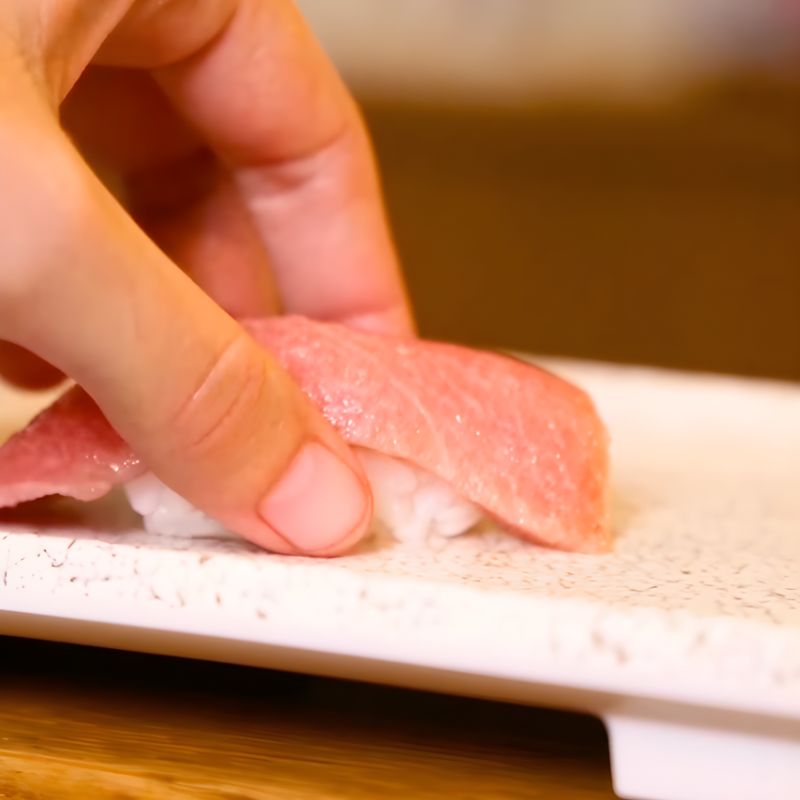
Three very different ways to eat sushi
The first is the platter, taken away or delivered. It is the most widespread and most accessible format: the rice is prepared in advance and the pieces are assembled quickly. The second is table service, in a restaurant offering sushi alongside other dishes. The third is the counter: the chef shapes each piece in front of you and places it directly before your seat, at the temperature at which he wants it eaten. The three answer different appetites and none ranks above the others — but they are not judged by the same criteria.
The rice is half the sushi
In Japanese the rice used for sushi has its own name: shari. It is seasoned with vinegar, salt and sometimes sugar, then held close to body temperature. Good shari holds together on the way to the mouth, then falls apart at once; the grains stay separate and the acidity arrives before any sense of fat. It is the most revealing criterion, and the easiest to observe: if the rice is cold, packed tight or silent in the mouth, nothing else will make up for it.
Ten words for reading a Japanese menu
Nigiri: a slice laid by hand on a finger of rice. Maki: a roll wrapped in nori seaweed. Gunkan: a band of seaweed forming a small vessel, for sea urchin or fish roe. Sashimi: raw fish served alone, without rice — so not a sushi. Shari: the vinegared rice. Neta: what sits on top. Edomae: the Tokyo style, in which the fish is cured, marinated or lightly cooked before serving. Omakase: “I leave it to you”, the menu chosen by the chef. Gari: pickled ginger. Agari: the tea served at the end.

Omakase: how a meal at the counter unfolds
The word means “I leave it to the chef”. In practice you do not pick the pieces: the chef builds a progression from what arrived that day. The meal usually follows a curve — delicate white fish first, then more pronounced flavours, cured or grilled preparations, and a gentler close. Each piece arrives on its own and is eaten within seconds, without waiting. Eating nigiri with your fingers is entirely normal; it is in fact the truest way. Mention allergies and dislikes when you book, not mid-service: the chef adjusts the progression in advance. See also: Sushi Kaiseki.
Five simple customs at the table
One, eat the piece as soon as it is set down. Two, if you use soy sauce, dip the fish side, not the rice: rice absorbs and falls apart. Three, in counter sushi the wasabi is already placed between rice and fish; there is no need to add more. Four, ginger is eaten between pieces to refresh the palate, not placed on the sushi. Five, strong fragrances mask the delicate smell of the fish, so it is better to go without that evening. None of these is an obligation; they simply make the meal truer. See also: The Art of Sushi.
Booking: when, and for what budget
A counter has few seats: booking ahead is the rule, especially at weekends and for celebrations. Allow time: a multi-course menu is best enjoyed without rushing. On budget, at Pavillon Yuasa the menus run from €65 to €95 per person before drinks, depending on the number of courses and whether wagyu is included. Prices vary from one restaurant to another, so it is worth checking when you book. State the number of guests, the occasion and any dietary restrictions at that point. Book online.
Sushi in the Chartrons district
At Pavillon Yuasa, 9 rue Camille Godard, chef Junichi Yamano works at the counter, each piece prepared in front of guests. Three menus are offered: a six-course Omakase (€65); Sushi Kaiseki (€95), which runs two series of sushi — first fish and shellfish, then fish and wagyu — framed by amuse-bouches, a starter of the day, a traditional warm dish and a dessert; and Wagyu Sumibi-Yaki (€95). The pieces are finished with the artisanal soy sauce of Yuasa, the historic birthplace of shoyu in Japan. Open Tuesday to Saturday from 7:30 pm, the dining room fully air-conditioned, reservations online. See the full menu. About the chef.
What is the difference between sushi and sashimi?
Sushi always involves vinegared rice. Sashimi is raw fish served on its own, without rice, so it is not a sushi even though it often appears on the same menu.
Should nigiri be eaten with fingers or chopsticks?
Both are correct. At the counter, fingers are the truest way: the piece is shaped to be picked up that way and holds together better than with chopsticks.
Should I add wasabi and dip the rice in soy sauce?
In counter sushi the wasabi is already placed between the rice and the fish, so there is no need to add more. If you use soy sauce, dip the fish side rather than the rice, which would absorb it and fall apart.
How long does an omakase menu take?
Plan for an unhurried evening: the meal moves at the chef’s pace, piece after piece. If you have a time constraint, mention it when you book.